
Affiliate Disclosure: We earn a commission if you purchase through one of our links at no additional cost to you.
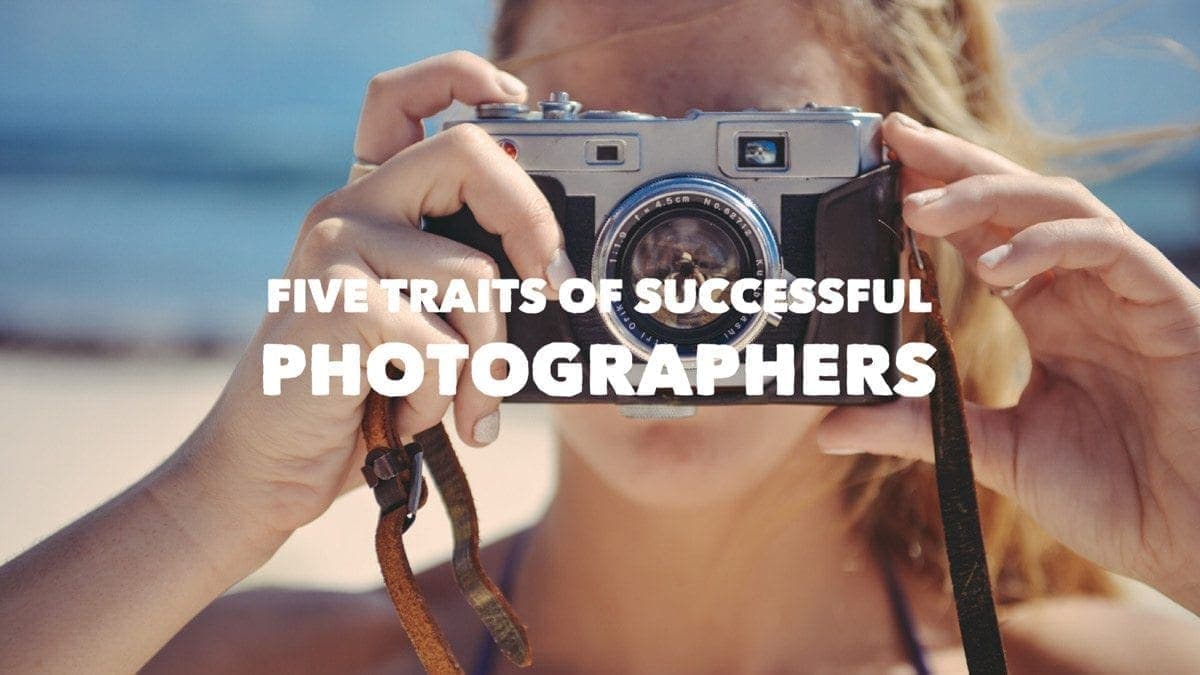
Successful photographers know that their work has little to do with the technical aspects of documenting a scene. Anyone can push a button and snap a photo as a technician. The value of a photographer comes with the knowledge and traits they use beyond the technical minutia to create an emotional connection that connects with their viewers.
1: Patience

Patience is often the difference between a photo and a snapshot. Just because you want a photograph right now doesn’t mean the subject is ready for you right now. Sometimes you just have to wait for the moment to arrive.
Successful photographers know you may have to wait for a sunrise or sunset. You may have to wait for a bird to land on a post in the water. You may have to wait for the perfect wave to crash.
Maybe – just maybe – you may have to wait for all of these elements to coincide to get a shot that no other photographer will get because they weren’t patient enough to let things happen. Maybe they weren’t patient enough to see what happened next.
The world will unfold on its own schedule, so pick a good spot – be patient – and be ready to capture the moment.
As the saying goes…
2: Timing
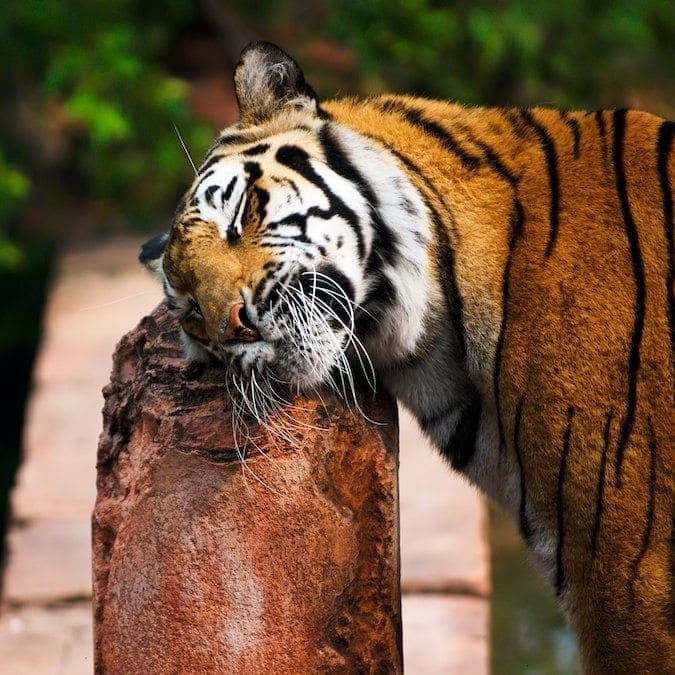
Some photographers enjoy shooting rapid-fire to get an action shot – spray and pray – and hope they have something good when the action is over. That isn’t control, though. It’s trusting your fate to luck.
It doesn’t matter if you’re shooting wildlife, sports or a model in a studio. There’s a concept known as the peak of action, and that’s the shot you want to capture. You may get it with spray and pray, or you may not. Rather than firing off a blast of shots, think about your subject. Put yourself in the subject’s position. Look for patterns, rhythms, or any clues that will help you predict when and where your subject will be at the optimum moment to capture the peak of action.
A big part of timing is knowing your subject. You need to know when is the optimum time for that subject to arrive in just the right place.
Do yourself a favor and practice your timing. Turn off the high speed shutter and just shoot with a single frame per click. You’ll get better with practice and it will help you in those moments when you need to get the shot at the peak of action.
3: Intimacy
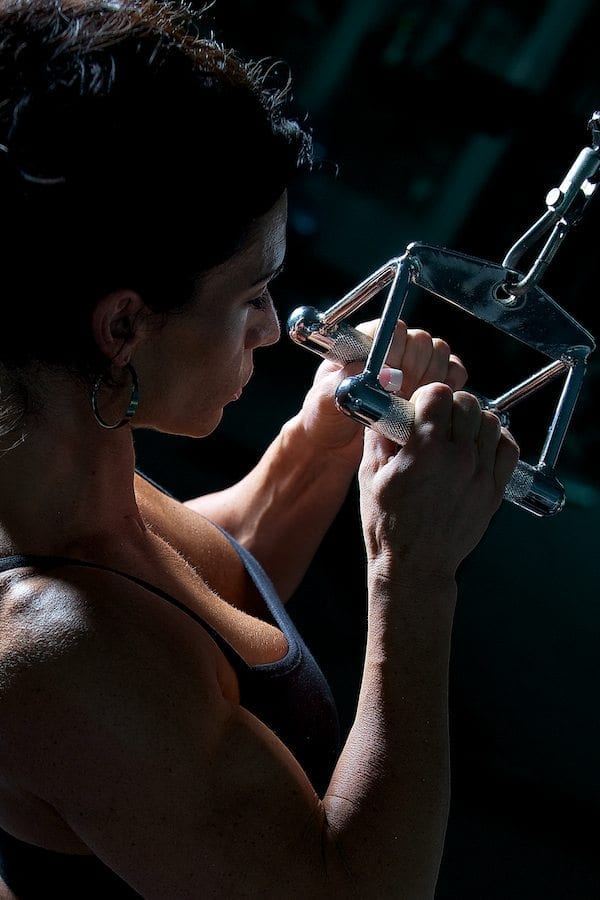
Intimacy helps your photos show a connection with the subject. Your viewers want to know what’s happening in your photos. They want to empathize with the subject.
You can do that by getting closer. Find the core of your photo’s subject and eliminate distractions. After you’ve done that, get a bit closer and see if you can eliminate more distractions. Successful photographers distill everything until there is nothing left to sacrifice without losing the message.
Our subject, Connie, is a body builder preparing for a competition. Think about what that requires of her and how you would communicate it to your viewers. She needs strength, commitment and concentration. She has to compete alone against the others. It’s deeply personal to her.
From this perspective, you see that she’s strong. She’s intent. She’s focused. The story is about her, but the handles show a relationship that helps define her as the subject. She has a relationship with the weights she’s lifting. She needs them in order to be the woman she wants to be. We show this relationship with those handles close to her. That’s the peak of action, when she bears the most pressure.
That’s when the relationship is at its most intense and intimate moment. Intimacy helps the viewer understand her story.
4. Light
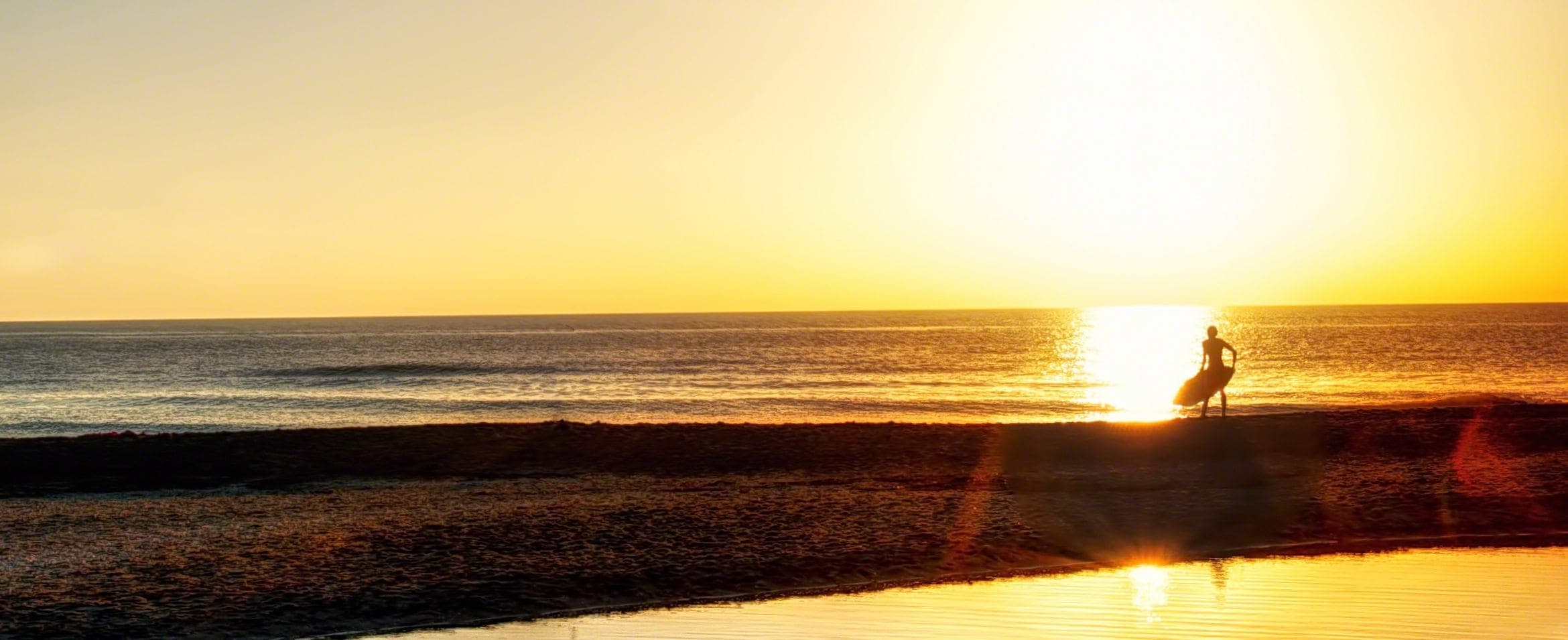
As a photographer, light is both your enemy and your friend. If you don’t have light, there’s no photo. If you have too much light, there’s still no photo.
That’s because an evenly lit photo is little more than a dull snapshot. Nothing stands out. Nothing is special because you see everything. There’s no mystery – you see it all.
Without shadows, we have no sense of depth or dimension. Shadows are crucial. Their sense of darkness give shape, form and a sense of importance to the part of the photo in the light. I heard a saying from Scott Kelby, who heard it from Joe McNally, who heard it from his editor at Life (who I suspect may have heard it from someone else).
If there’s anything about this photo that gives a sense of moodiness, it’s the absence of light that does it. Those shadows give a sense of gloominess, they show the edges of carving along the walls and statues. Those features stand out because of darkness and light working in concert with each other.
Without that contrast, you have no story because it won’t have anything to hold your interest. It’s just a snapshot.
5: Story

Successful photographers know their images have to tell a story.
I’ve mentioned this in the previous traits, but those were tools to lead you to the ultimate tip. If you want to improve your photos, then your photo needs to tell a story.
Your photos needs to say something to the viewer. It needs to draw them in and make them wonder. It needs to pique their interest. People look at images that are interesting. What makes them interesting? Story.
Photos that communicate with a sense of story are more compelling to viewers than snapshots that merely document a subject. Before you take your shot, ask yourself why. What are you trying to communicate? What should the person who views your photograph feel?
Why is the girl in the water? What is the surfer thinking before he enters the water? I wish I had her dedication. Why does this dangerous beast look so content? Where is this relaxing scene? There are stories for any emotion.
If you can feel an emotion, then there’s a story to go with it. That’s what you need to capture and share with your viewers.
Successful Photographers Are More Than Technicians
It’s great to have nice gear. It’s better to know how to use the gear you have. Still, the gear and the technical abilities are merely tools to use to support your vision.
All the gear and skills in the world won’t create a compelling photograph for you. It’s up to you to know what to shoot, when to shoot and how to shoot your subject.
Patience, timing, intimacy, light and story can help you get your most compelling images.