

Affiliate Disclosure: We earn a commission if you purchase through one of our links at no additional cost to you.
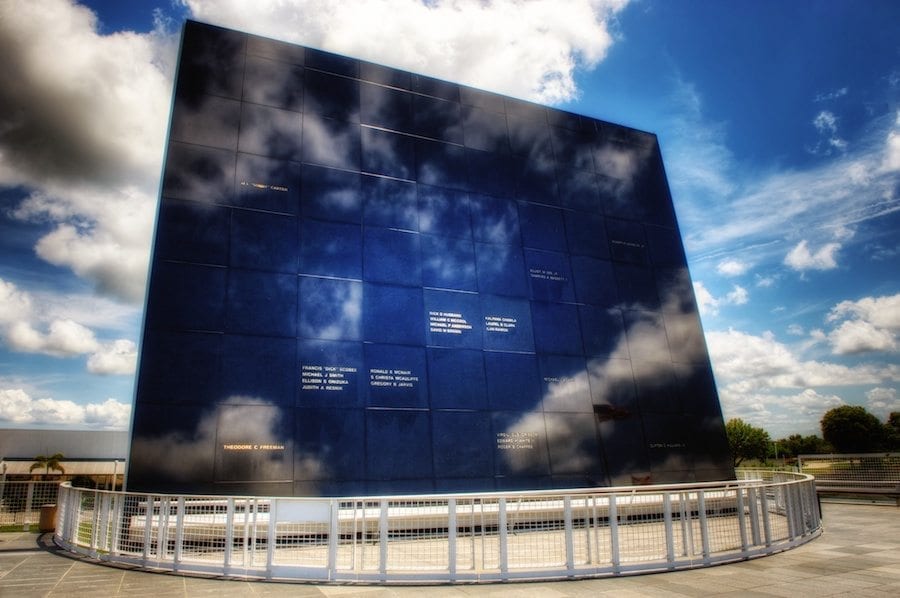
WebUrbanist Takes My Photo Without My Consent
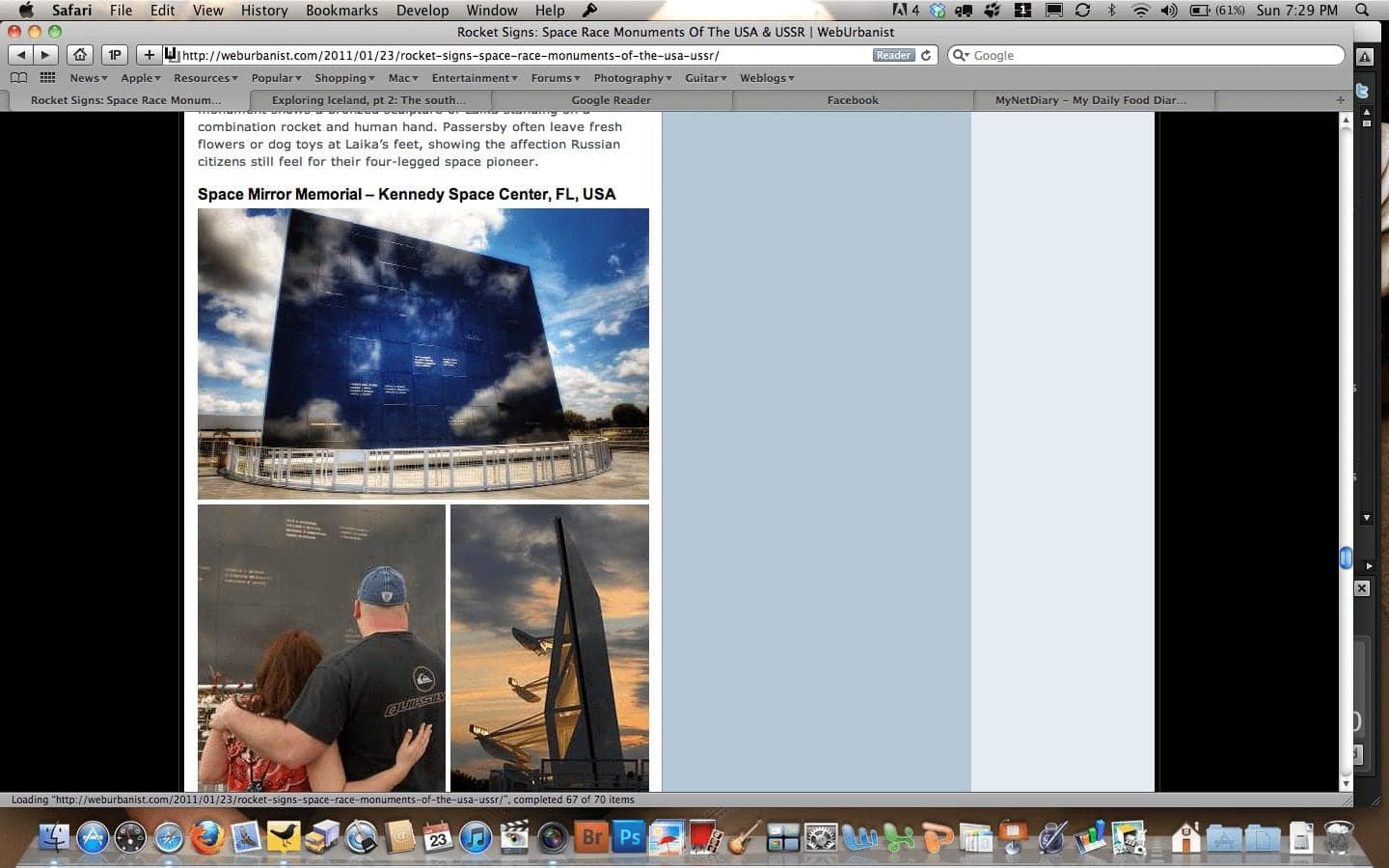
I’ve said it before. If you put your photos on the web, someone will come along and take them. It happened to me again this weekend. While looking over my traffic stats for the blog, I noticed some visitors coming from a URL I didn’t recognize or anticipate as a referrer. I checked the link and found this article on a site called WebUrabanist. The article showed a comparison of monuments to the space race between the USA and USSR. Sure enough, they pulled my photo (above) of the Space Mirror from this blog. The image wasn’t just referring to my site, but was extracted and included in a montage of other photos of this monument. There was a small link at the bottom of the photo montage back to my blog, and I eventually received a Pingback from them.
How Did It Make You Feel?
I’m glad you asked. Quite honestly, it pissed me off! The article is full of photographs they found on the web and felt like using. In some cases, that’s OK. For example, photographs from NASA belong to the people. However, photographs from individuals or businesses are property and shouldn’t be used by a reputable business without consent or license. They never asked to use my photo in their article, so I regard it as copyright infringement, or more simply state – theft. I see no reason why I should spend time and money just to provide a business with free content so they can make a profit.
I’ve been watching this happen to other photographers as they comment about it on Twitter. David Hobby (Strobist) mentioned a few cases of infringement recently on Twitter. Alan Hess has also worked to rectify a problem with Kazaa.com using his images from Flickr.
What Did You Do About It?
The first thing I did was take a screen capture of the infringement to show that my photo was being used on their website.
I had some options. This photo, like all of my photos, are registered with the U.S. Copyright Office. As I’ve frequently read, you must register your photos with the copyright office if you want to receive statutory damages – up to $150,000. Otherwise, all you can get are actual damages and you may not even get that much. One of the courses on Kelby Training I found very helpful was from Jack Reznicki and attorney Ed Greenberg (The Copyright Zone). Ed stated that registration is imperative. Copyright infringement is a federal case and the first thing you’re going to be asked is if you filed your registration with the federal government. If not, as I understood Ed, you don’t have a leg to stand on in your claim. If I decided to sue, at least I had laid the groundwork by filing my registration when I took the photos.
I recall something that Scott Kelby said during a panel on blogging at the las Photoshop World.
As Scott Kelby shared during a session about Blogging for Photographers at Photoshop World, he’s not worried that some big corporation is going to steal his images. He’s praying they will so he can cash in on it because he registers all of his work.
It’s tempting. Very tempting.
However, I didn’t want to start off on that option. My concern was simply that I didn’t want a business using my images, so I had another option – The Digital Millennium Copyright Act (DMCA) Takedown Notice. That’s a long name for a relatively standard form to submit to order someone to take down copyrighted material, consisting of the following elements:
(i) A physical or electronic signature of a person authorized to act on behalf of the owner of an exclusive right that is allegedly infringed.
(ii) Identification of the copyrighted work claimed to have been infringed, or, if multiple copyrighted works at a single online site are covered by a single notification, a representative list of such works at that site.
(iii) Identification of the material that is claimed to be infringing or to be the subject of infringing activity and that is to be removed or access to which is to be
disabled, and information reasonably sufficient to permit the service provider to locate the material.(iv) Information reasonably sufficient to permit the service provider to contact the complaining party, such as an address, telephone number, and, if available, an electronic mail address at which the complaining party may be contacted.
(v) A statement that the complaining party has a good faith belief that use of the material in the manner complained of is not authorized by the copyright owner, its agent, or the law.
(vi) A statement that the information in the notification is accurate, and under penalty of penalty of perjury, that the complaining party is authorized to act on behalf of the owner of an exclusive right that is allegedly infringed.
You can find a DMCA tutorial by Jason Wilder here: http://www.musicphotographers.net/guides-and-tutorials/dmca-letter
Once I prepared my DMCA Takedown Notice, I had to know where to send it. The website had a contact form and I submitted my notice there. I also sent a notice to their web hosting company, or so I thought. The hosting company replied and told me that the content was not on their server, but they did point me to the correct hosting company.
How Did They React?
The next morning, I had a response from the Executive Editor of WebUrbanist.com:
Greetings William-
As per our policy, we will remove the image you have identified as a courtesy. While WebUrbanist operates under fair use provisions, we prefer to simply follow the express wishes of copyright holders when they request removal in cases like this.
Best wishes,
-= Kurt
Kurt Kohlstedt, Executive Editor
Webist Publishing & Misnamed Media
Was This Fair Use?
Not from my point of view. They needed something. They weren’t willing to pay for it. They took it without notifying me. From their perspective, as evidenced in their response, they believe they operate under fair use provisions. I turned to Carolyn E. Wright’s Photo Attorney blog to read up a bit more on Fair Use. Based upon what I read, I don’t believe it’s Fair Use.
- By including my entire image in a composite with other photos, they could claim it was a derivative work. A reader wouldn’t know that the photos were included together in one JPEG by looking at it, though. It wasn’t transformative, though, even if it was derivative. The image looks the same.
- They used it for a commercial business, as evidenced by the advertisements.
- They took the entire image, not part of it.
- Does it directly compete with my business? I’m not in business, per se. However, we’re both running web sites (or blogs) and that is my usage of the material. My argument would be that they were in direct competition.
Lawyers disagree and fight over the meaning and definition of fair use, so I can only present my opinion on the matter. I just don’t see it as fair use at all, though.
One Good Thing
There is one good thing about this experience. When I submitted my DMCA Takedown Notice, they complied immediately. The photo was no longer on their site as of the morning I received the e-mail from Kurt. There was no need for me to call up lawyers, start filing lawsuits and going through all the misery that entails. The DMCA Takedown Notice worked effectively for me.




Thanks W, I learned a lot here! Had heard of the DMCA act but this was enough to make me look into it. This is a great photo. I’ll go ahead and un-post all those bikini shots you took 🙂 . I need to learn how to use Wordpress so I can form a blog. Would love to share my knowledge and processes.
Glad I could help. Now about those bikini shots…
This is totally not fair use. This company has advertisements all over their site and their main priority is making income from those adverts. They used your photo for profit not education. Also by them using your photo, it actually devalues the work as you can no longer license that photo under a exclusive license. If by using a photo and it devalues it, it is not considered fair use.
Thanks, Jason. I also didn’t think it passed the smell test for fair use, but I admit I’m biased in this case. I appreciate you giving it a look from a 3rd party perspective.
Since that same page is using one of my images as well (the Gemini monument with the sun), I’d like to play devil’s advocate and offer the other perspective.
I’m pretty happy to see my shot being used and getting seen. Perhaps the difference is that my image is a mediocre snapshot on which I spent very little time and from which I never had any expectation of making money, so I’d much rather see it being used and viewed on a website than moldering uselessly in the depths of my Flickr account. That’s why I post most of my non-commissioned work to Flickr under a Creative Commons license–all I ask for is credit and a link back, which WebUrbanist provided. In my mind it’s a win-win: they get a piece of content and I get the warm fuzzies from my shot being put on display, and if anyone likes it all that much there’s an easy way for them to see more of my work and get in touch.
Let’s face it, with the explosion of digital cameras and social media there are any number of shots of any given subject that sites can pick up to use for free. Most of the people whose images they use will never even know it, even if they keep it above board by linking back, and I’m sure they count on that. Strictly speaking, in a lot of instances it’s not right, and I’m glad people who feel strongly about it like yourself stand up now and then and remind them that people are paying attention and taking their intellectual property rights seriously. As for me, I’ll take it on a case-by-case basis, and in this particular case I saw nothing to be upset about.
Kelly, you bring up some great points. Most important of all, in my mind, is the type of license associated with a photo. In your case, you’ve assigned them a Creative Commons license that allows for such use. Nothing wrong with that. I’ve considered using Creative Commons licensing for personal use, but I wouldn’t give a license for a commercial use.
In the case of my photo, I add my copyright notice and other metadata to all of the images that clearly show my copyright and ALL RIGHTS RESERVED. They provided a link back to my blog, so I presume they found the photo here. I just can’t find any excuse for taking an image from any site unless it’s marked with a Creative Commons license, as you provide. The thing that bugs me a bit more is the statement on their site to protect their own copyright for content. To me, it seems a bit two-faced.
Thanks for adding to the discussion. I do admire some aspects of Creative Commons, but haven’t yet decided to take the plunge. After all, it’s non-revokeable once you do it.
Just a few food-for-thought items with respect to your Fair Use reasoning.
“By including my entire image in a composite with other photos, they could claim it was a derivative work. A reader wouldn’t know that the photos were included together in one JPEG by looking at it, though. It wasn’t transformative, though, even if it was derivative. The image looks the same.
They used it for a commercial business, as evidenced by the advertisements.”
The counter-argument goes as follows: the article as a whole was transformative, not a particular montage. Think of someone who builds a sculpture out of 10,000 cans of brand soda, for instance, or someone using the image of a book cover to do a review and so forth. The purpose is different.
“They took the entire image, not part of it.”
In some sense, perhaps, but ultimately/technically not true – by reducing the size/scale/quality it actually has much less data than the original full-sized version. It is a thumbnail of sorts. Think of Google Image Search results.
“Does it directly compete with my business? I’m not in business, per se. However, we’re both running web sites (or blogs) and that is my usage of the material. My argument would be that they were in direct competition.””
But how? They have different audiences, and some of those readers from one audience who saw the link would then click that link to find your content, which is different in nature and readership.
Anyway, just someone’s 2 cents here.
Sorry to hear how it turned out as from my perspective it accomplished two things. First it deprived the public of seeing your work which most likely they may not ever have had it not been for the website. Second, you failed to look at it as “free” advertising. Your “product” out there WITH a link to your website was viewed in a contrary way, IMO. I would LOVE to have a work of mine placed out there for public viewing with an appropriate link back to me. To each his own. Nice pic though.
Sam:
If I published the photo here, or on Flickr, I fail to see how I’ve deprived the public of seeing my work. If that web site could find my photo in order to steal it, then so could anyone else. I also reject the notion of “free advertising.” They didn’t use my photograph to offer me any service. They stole it for their own selfish reasons. Otherwise, why not contact me and request usage of the photo? Others have done that and I’ve granted them the right for a photo – sometimes without any other compensation than a credit and a link back to this site. There are some photos that I’m willing to license and others that I prefer not to license. It’s my work. I went to the expense to buy the gear, learn how to use it and travel to places to take the photos. Isn’t that sufficient enough to at least have the courtesy of a request before someone takes my work for their own use?
Photos are property. Would you mind if someone stole your car for their own use, but provided a link back to tell people they stole it from you?