

Affiliate Disclosure: We earn a commission if you purchase through one of our links at no additional cost to you.
I’m starting to think that portrait lighting techniques are cause more arguments among photographers than HDR.
Portrait Lighting Considerations
For every little piece of gear in portrait lighting discussions, there are vehement debates about what is “best.” There are even debates about whether you should say what is best or give people information to let them make up their minds.
We like to critique each other’s portrait lighting techniques, even if we don’t say it aloud. I do not doubt that several people who read this article think that I should have used a rim light on this portrait.
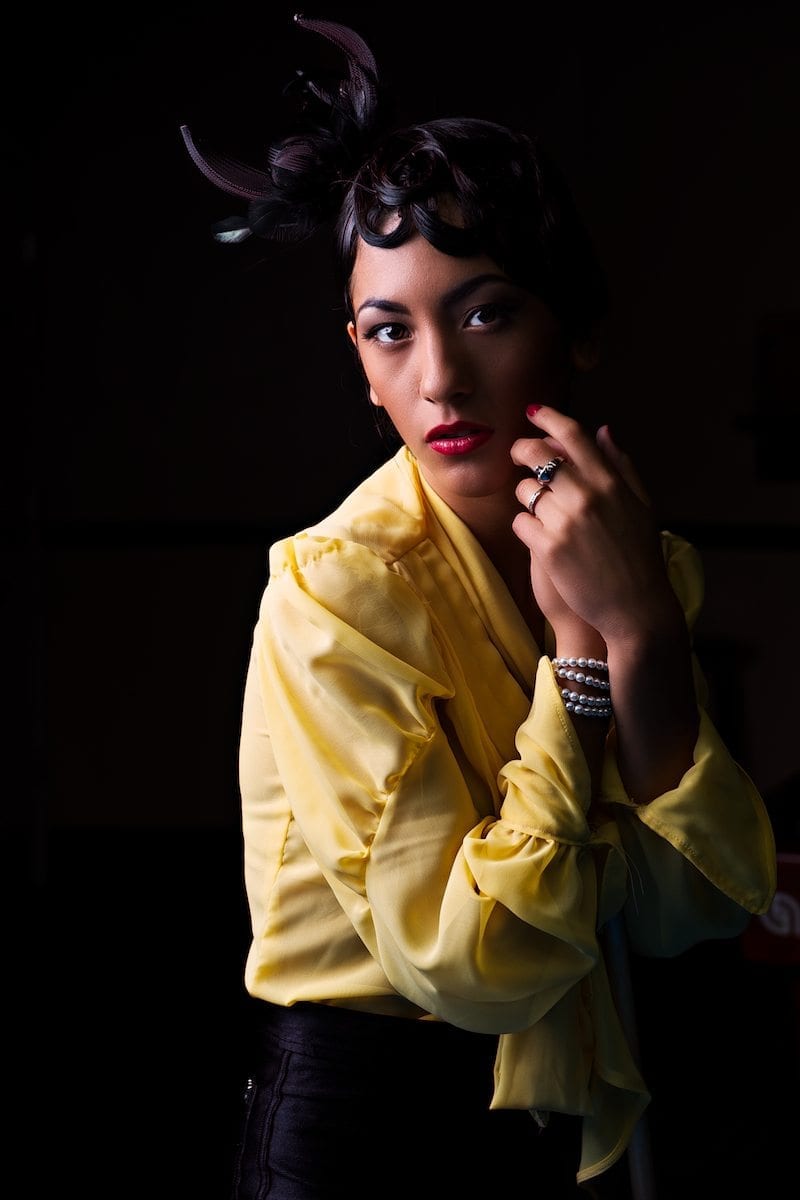
Why didn’t I have some fill on her left side? Split lighting is no good on women! You know. Stuff like that.
You know what I think? I think it’s OK to have some debates. Imagine how boring it would be if we all used the same exact portrait lighting pattern.
Photography would become devoid of creativity and expression if we all agreed that one technique was “best” and all photos had to follow that same formula. I think it’s OK to be different. It’s OK to experiment. It’s even OK to disagree about portrait lighting techniques.
I used one small flash in my portrait lighting setup for this photograph. My choice here was partly creative and partly forced by necessity.
The creative aspect was to create an intimate portrait because the environment behind her was so ugly that I didn’t want it in the image.
The necessary part was choosing to use one flash because the battery door on the other one broke. Otherwise, she’d have some rim light on the opposite side of the key light.
Shit happens and you have to deal with it. Did I absolutely need the rim light? No. I needed one light. Even the window light in this place was ugly due to a blue film on it.
People who are much smarter about portrait lighting than I am have advised folks to keep things simple. Start with one light. Work with one light until you come to a problem.
Then when you think you need a second light to solve the problem, see if you can solve it with just one light. Many people are amazed when they find out that their feet can actually move and create different lighting on their portrait subjects.
In other words, move the camera instead of moving the light. See what happens. Don’t nail your feet to the floor.
My friend Steve goes to several portrait lighting workshops, including some by Playboy photographers. He mentioned that one of those photographers will use up to 40 lights on a Playboy centerfold shoot.
My mind boggles at the expense and complexity of setting up a shoot with 40 lights. He assures me that each light has a very specific purpose to draw your eye to part of the scene. I don’t doubt it.
On the other hand, I’m not shooting for Playboy. I have two flashes and three studio monolights, and a variety of light modifiers to make them work. Most of my scenarios are one or two lights. I bought the third monolight for a specific high-key style. Here’s a behind-the-scenes shot to give you an idea.
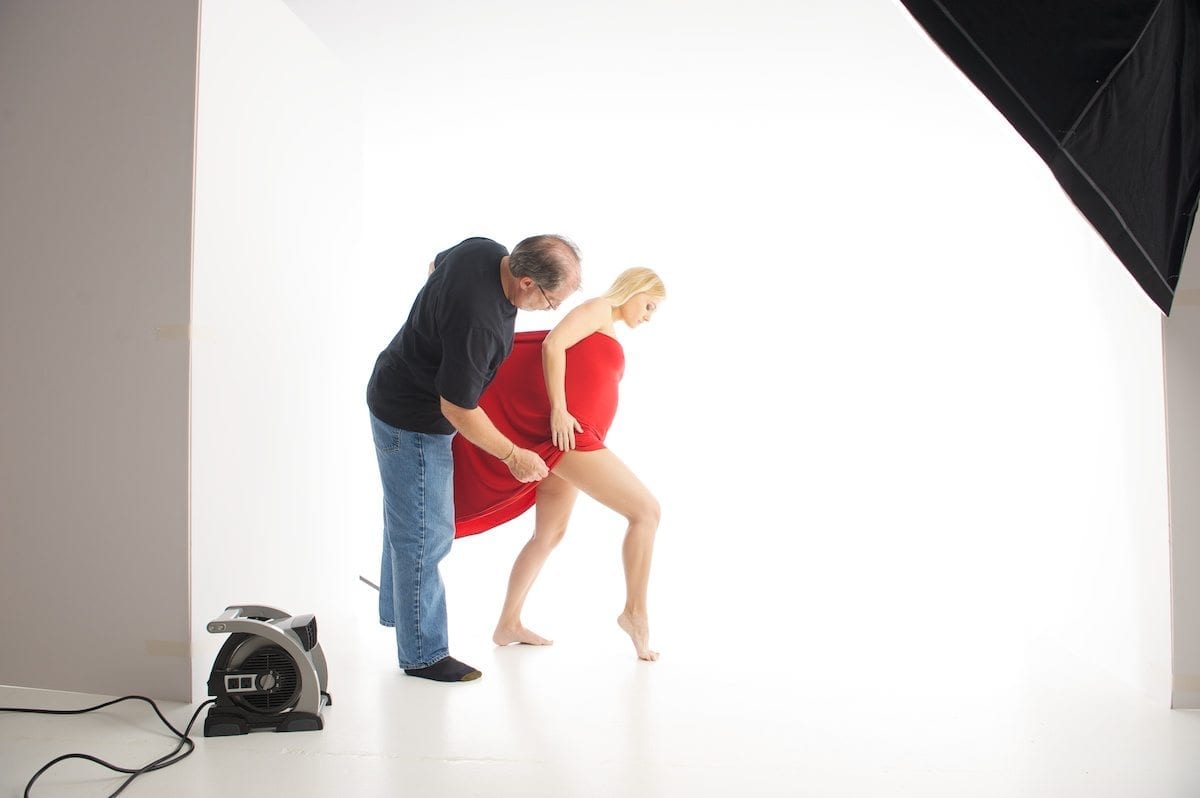
By the way, that’s Steve helping the naked girl under the red cloth.
I created some v-flats with 4×8 foam core boards for this portrait lighting setup. It’s much more convenient to buy some from V-Flat World, though.
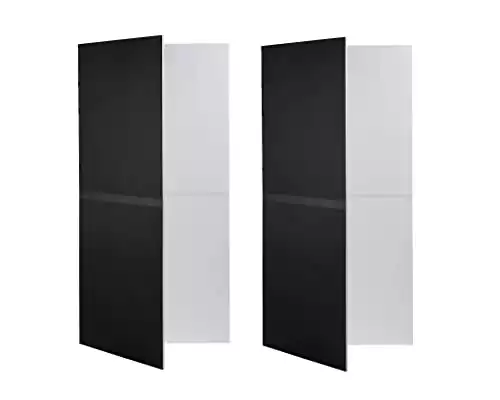
V-Flat World's Foldable V-Flat is a must-have for any photographer or videographer. This versatile modifier can reflect, block, or flag light, making it a versatile tool for any lighting situation. The black and white sides offer different options for creative control, while the foldable design makes it easy to transport and set up. With a weight of only 7lbs., the Foldable V-Flat is easy to carry and use, giving you total control of your lighting.

There’s a monolight behind each one aimed at the white cyclorama wall, and you can see the octa soft box on the right side.
We used three lights for these high-key shots, and again using a portrait lighting setup from Joel Grimes for compositing shots. The rest of the time, it was primarily a one or two light affair. This is the same environment I used for my post How to Charm the Pants off a Woman. All I had to do was turn off the key light.
As I do more portrait lighting, even as I do more HDR, one thing keeps coming back to me as a constant in photography. There’s no sense in buying any gear until you know what problem it will solve for you.
That’s how you tell when you need another light, or a soft box, a grid, a new lens or even a new camera. I will guarantee you that owning gear isn’t what helps you improve. It’s understanding how to use the gear for a given situation.
Does gear matter? It does if it solves a problem for you. There’s an old saying, “You don’t bring a knife to a gunfight.” On the other hand, some people get too wrapped up in gear. I’ve found some stunning photography shot with an iPhone. It was the mind behind the camera that made it stunning.
There are many different approaches to photography, and portrait lighting is no less of a choice based on personal taste. Embrace the different techniques and learn what you like.




Padraic and SoniaDeasy teach photography courses to portrait photographers all over the world. Their techniques of taking the courses is very good and also they teach how to take portrait photography as a business. http://www.padraicandsonia.com/