
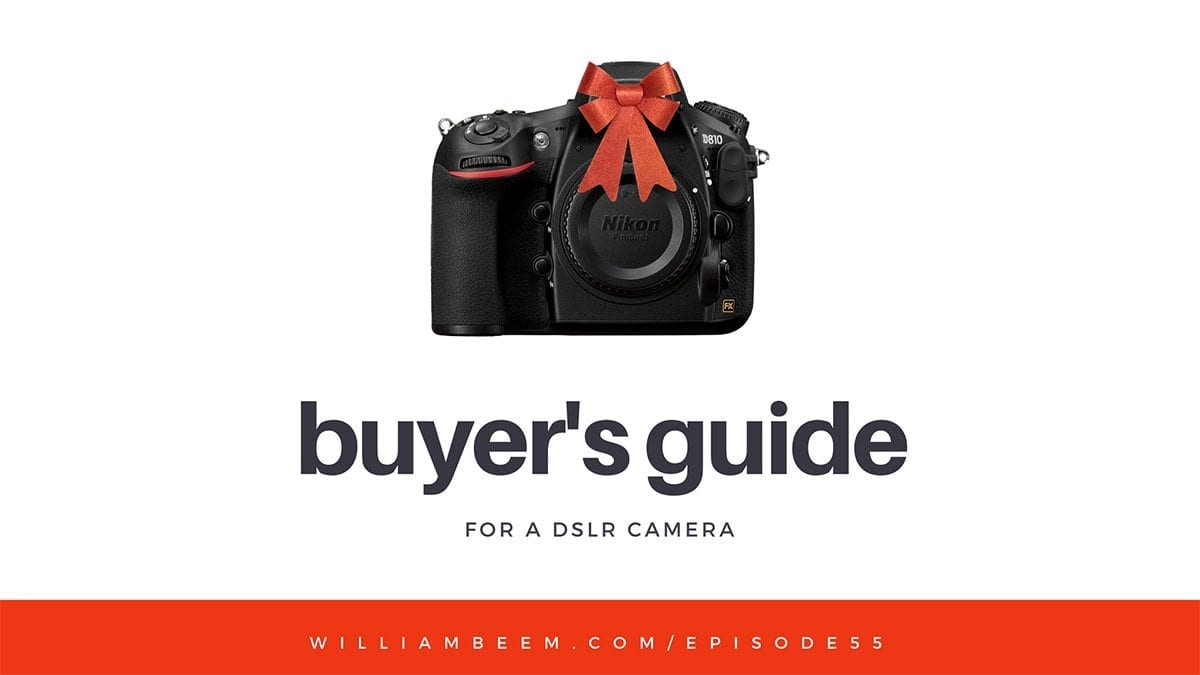
The Best DSLR Choice You Can Make Is One That Serves Your Photography Needs
Thank you for listening to The Photo Flunky Show. We’re glad you’re here to give some thought about how to choose the best DSLR camera for your photography needs.
**This post contains affiliate links and I will be compensated if you make a purchase after based upon my recommendation.
When you think about the “best DSLR”, it may sound like a big honking camera with all the bells and whistles, like the Canon EOS-1DX Mark II DSLR Camera (Body Only) or the Nikon D5 DSLR 20.8 MP Point & Shoot Digital Camera, Dual XQD Slots - Black. Both are outstanding cameras fit for professional photographers in journalism, sports, commercial photography, weddings and more.
They’re also expensive.
There are a great many professional photographers who not only need these cameras, they need multiple bodies. If your camera fails, you are no longer a photographer. Gotta have a backup.
Of course, that doesn’t mean these are the “best DSLR” cameras available, because that depends upon your needs. Maybe you need a small, lightweight camera for travel or street photography. Those flagship DSLR cameras can be really heavy.
Maybe you don’t need a DSLR camera with such high ISO sensitivity that it can practically see in the dark and produce photos with barely any noise. Portrait photographers generally use flash or strobes, so they can shoot at much lower ISO with better clarity. Travel and landscape photographers would rather spend their money on a good tripod so they can shoot at low ISO or for long exposures.
Why Pay for Features That Won’t Provide a Benefit for You?
I mentioned on the podcast that I would include a link to the Amazon Best Seller DSLR list (updated hourly). If you take a look, you’ll notice the top sellers are actually entry level to mid-range DSLR cameras. They do a wonderful job.
At the time I’m writing this notice, the Nikon D750 FX-format Digital SLR Camera Body is number 10. That is an outstanding camera. I know amateurs and pros alike who love that Nikon. It’s much less expensive than the Nikon D5, yet is versatile enough to do many of the tasks that it’s big brother does at nearly one third of the price.
I don’t know about you, but I could buy a nice lens or studio light rig for the price difference.
Lee and I cover some of the issues you should consider to pick the best DSLR for your photography. If you would like to add your own advice, please leave a note in the comments to help other readers.
[easyazon_bestseller cloak=”y” items=”10″ locale=”US” node=”3017941″ tag=”williambeemsw-20″ title=”Top 10 Overall Best Selling DSLR”]
Transcript
THE PHOTO FLUNKY SHOW: Episode 55
Hey, welcome to the Photo Flunky Show, Episode number fifty-five.
Our topic for today: we just kind of want to ask you, is photography hard? Or do we just think it is?
William: Thank you for joining us on the Photo Flunky Show, episode number fifty-five.
Today we’re going to be talking about purchase decisions and how to buy the best DSLR for your photography.
Hey, we appreciate you being here. My name is William Beem.
Lee: Hi, my name is Lee Beem.
William: And today we’re going to be talking about how to buy the best DSLR for you. And this kind of came up because people are asking questions. You know. What’s the best DSLR? And there really is no one best DSLR.
That’s why they make so many different types and styles and brands of them. It’s because it depends on what you need to do. So we’re going to kind of be going over some of the things that your motivation and your requirements – and those words sound really boring – but we’ll try to liven it up a bit as we go through it.
And before we get through that, let me tell you that show notes are going to be available at williambeem.com/episode55 and of course, you get a transcript of the show there.
You can subscribe to the show and get it delivered to you fresh and new every time it comes out. Just go to photoflunky.com. On the player there you’ll find links to subscribe on iTunes, Google Play and others.
Finally, we would advise you to follow us on Facebook, Twitter, Instagram and Pinterest. Just go to williambeem.com and you’ll find links up in the header that will get you connected to us on social media.
So let’s get down to it. What is the best DSLR for you? I’m presuming that everybody knows what I mean by DSLR. It’s really … it stands for digital single lens reflex and when you’re shopping that’s the only time you’ll need to know what that means.
Lee: Yes.
William: Basically we are talking about a camera with interchangeable lenses and a mirror inside. So this is not going to be covering micro four thirds, it’s not going to be covering mirrorless; these are single lens reflex cameras that just happen to be digital – which is most of what’s on the market available.
Lee: Pretty much, yes.
William: I think for people that are either visiting our website or listening to the podcast. So let’s start off. What’s your motivation? Do you want or need to get a new DSLR?
Lee: See, to me, want for something like that is almost a bigger motivating factor than need. Unless you are going into something professional, nobody really needs a DSLR, but I think it’s more than acceptable to have something just because you want it.
William: Do you mean outside of a professional photographer, nobody needs a DSLR?
Lee: I don’t think you need one. You’re trying to justify it by need? I suppose it depends how far you take it, but I mean, do you really need one?
William: I think it depends on what you want to do with it, whether you’re professional or not. So when I say need, it’s do you have a camera now? So let’s go to the steps you were talking about.
Are you upgrading or starting fresh? If you’re starting fresh it’s probably because you want one. There are capabilities that you just don’t have if you are shooting with an iPhone or a point and shoot.
Lee: Oh, I’m sorry. That’s where I was coming in. I thought you were leading into it from the start. Alright.
William: From the start?
Lee: Well from, you know, starting out with no DSLR. This is your first one.
William: OK.
Lee: So that’s why I was saying ‘want’.
William: So we were confused with each other already.
Lee: Oh, no!
William: OK, so if you’re starting fresh, getting into a DSLR and it’s not for a professional purpose, then I would say most likely it’s a want. But not always. The reason that I got back into photography … oh, here I have to go with my old story again.
I was in high school. I wanted to be a professional photographer. I was all set to a professional photography school; either Brooks out in California or it’s now Daytona State College – it was Daytona Beach Community College at the time – both of those were kind of like the top photography schools in the country.
And since I lived in Orlando, Daytona Beach Community College was looking really strong. And I got side tracked into personal computers and into a whole IT career, but when I got back into photography it was because I had problems with my point and shoots.
I went on a cruise in Alaska and I brought my old film SLR cameras with me and I thought I had everything right and I didn’t pay close enough attention because I brought the bodies from one brand and the lenses from another. So I couldn’t do a thing with those.
Lee: Oh!
William: So all I had was a little Nikon 775 (I think the model was). And this is probably one of the crappiest point and shoot cameras that was ever developed!
There was a phrase called shutter lag, that I wasn’t familiar with at the time.
Here’s what happened. I was on the boat in Alaska. A whale would come up and reach, I’d push the shutter trying to get that little moment and the camera would stop and think for two or three seconds and then the whale would go back under water and there would be nothing but bubbles and a couple of ring waves. And then the click came through!
Not only that, but the photos were crappy. They were grainy. I thought OK, I need something better than this if I want to get back into photography.
It wasn’t professional at the time. To me in my mind, at the time, that was a need. If I want to take nice photos, I need a better camera.
Lee: I understand that, yes.
William: But I also see what you’re saying. Like it’s really a want, because you’re not, at that time, trying to make money out of it.
Lee: Well that was really where it was coming from.
William: I guess what we are saying is kind of be honest with yourself. Are you buying a camera because you need it? Maybe for requirements for a job or something like that, or do you just want one?
Lee: Yeah.
William: That’s what I was thinking of with wants. Like I just want it. It looks nice. It looks pretty. It’s got live feed or something on the back and I want it. And that’s OK. That’s not a bad reason for buying a camera.
Lee: Oh, I think it’s the motivation for most of us for our first ones at least.
William: It is a lot of fun. It’s like I just want it.
Lee: Yes.
William: What we are talking about with if you’re trying to see why you want it, why you need it, is to help you make sure that you buy one that is actually going to make you happy.
If you are buying a camera because you think this is a bigger camera, this is a professional camera, it’s going to take nicer photos, you’re probably going to find out that all of these cameras will take really good photos on a bright sunshine day, but when you get into more challenging circumstances, some of them may not do as well as others.
Lee: Well, first week with my first DSLR I took the worst photos I’ve ever taken in my life. At age three, my daughter took better photos with a disposable camera than what I got out of that DSLR because I didn’t know what the heck I was doing with it.
William: Yeah, so sometimes maybe what you need to take better photos, if that’s your motivation, is really training rather than a piece of gear.
Lee: You know what’s really annoying? When you pay money for something that is supposed to take good photos and then you have to do stuff to make it work!
William: That’s kind of like the photographer’s favorite thing. When someone comes up and says, “Oh that’s a nice camera. It must take wonderful photos.”
Lee: Yes.
William: And all you want to do is mix up all the settings, put it down on the table and say, “Go ahead. Try it.”
Lee: And you don’t even have to mix up the settings. I mean, if you don’t shoot on auto, they are probably going to …
William: Yeah, it’s not the camera. I mean yes, the camera can help you; but you’ve got to know what you’re doing. From your motivation, if you are not getting the photos that you want out of the camera, is it because the camera can’t do something, or you need to learn something?
So before you go spend money, I guess my first piece of advice is to determine your motivation. If you need education, sometimes that’s money better spent than buying new gear.
Lee: You might need a piece of equipment or an accessory that goes with the camera to help you.
William: So requirements; you might have special photography needs. I’m talking about people who shoot certain things like events or weddings. Wedding photographers – it’s an event obviously – but they can’t necessarily go in there going clack, clack, clack and disrupting the wedding ceremony. And some of those churches don’t have the best light.
Lee: That’s also true.
William: And it’s not just the church. It’s the environment. Where are people getting dressed? You know, you want to sometimes get the preparation. You want to get all these events ahead of time. Later on when the reception is going, the sun may be going down. You need a camera that works well in low light at a high ISO, so those would be a little more expensive. If you’re going to be a concert photographer you’re going to have a lot of light on the stage.
It’s almost like a sports photography thing. You need to be able to shoot off frames very quickly, because you’re capturing action.
Lee: Yes.
William: And the same thing if you’re a news reporter. Have you ever watched the President when he goes up for a press conference? You hear those shutters just flashing on.
So depending on what your requirements are, that’s going to help inform you what you need by the type of photography you do.
If you’re doing long exposure, you can do that with a low ISO and you probably don’t need to spend a whole lot of money on a camera.
Lee: That’s also true. Get a tripod.
William: Yeah. Tripods are your buddy. I would spend more money on a tripod than a camera if I were doing that kind of work.
Lee: Well, that’s why I very rarely upgraded and I’m happy with my camera now. You know, given the choice, I would rather get a really nice lens instead of spend money on a new camera body, because I’m happy with what I have. The lens will make more difference to specific types of photography than a new camera for me.
William: Exactly and I think this is kind of where we’re going. If you’re upgrading or starting fresh, you’re buying into a system. If you buy Nikon, you’re not going to be able to use Canon lenses without some kind of an adapter ring and even then, you’re going to lose some of the special capabilities that your camera has. You might be able to use the lens, but it’s not going to give you the information transferring with that little adapter ring.
So you’re buying extra stuff. You don’t really want to have to do that. If you’ve already got a DSLR and those other lenses will work on the camera that you’re looking to moving to, it kind of makes sense to stay with the brand that you’ve got.
Lee: It does.
William: But there are occasional exceptions to that. You were talking about whether you would want to go full frame or not.
Lee: I did, and I decided not to without doing very much research into it. I kind of stopped short very early on in looking into it.
William: I kind of read into the same situation. I started off and my first DSLR was a Nikon D70. That was kind of just to get into it and start shooting digital. It was a nice little camera. It was a good beginner starter camera and the reason I bought it is because it felt better.
I went to a camera store and I picked up the Nikon, I picked up the Canon and quite honestly I bought it because the Nikon felt better in my hand than the Canon did.
Lee: I was exactly the same. I mean when I went around it was actually because my brother was looking at cameras and I at the time I wasn’t looking for a DSLR myself. It was probably at least a year before I eventually did buy my own one, which kind of happened by accident. But I was walking around the store and I always remembered that I liked the feel of the Nikon.
The Canon looked just as nice to me as the Nikon did, but those are your two most well known brands. I just felt the Canon didn’t have as nice a feel for me. It wasn’t as comfortable in my hand and I think the bodies and lenses tend to be a little bit lighter, which is an appeal for some people and it might be one of the draw factors for you, if that’s what you are looking for.
But for me, I like something that feels a bit more solid.
William: The weight would definitely be a big factor because if you’re going to be walking around carrying something, the cameras that I have now are heavy. And after a while I get tired of lugging them around. If you’re going on a vacation and you just want to take some snapshots, you can get some nice quality images, but you’d want more than a point and shoot or a phone.
Lugging around … I’ve got a D800 with a battery pack on it, so the camera body itself is tall and heavy. Then by the time I add a lens onto it, I’ve got a 24-70 mm, I’ve got my 70-200 mm … that’s a lot of weight to carry around!
I know you can get a 28-300 mm as a travel lens to go with that now and that’s probably a good choice if you’re walking around. But you are still just lugging a lot of weight on that. Whereas if you’ve got a more compact camera that is maybe a crop sensor with the 18-200 mm lens on it, you’re going to be much more comfortable traveling around and walking around the city or doing street photography or taking shots while you’re on vacation.
Lee: Yes. I mean I like my crop sensor camera. I’ve got the D7000 and I’m happy enough with it. It’s kind of solid enough for my liking that I can feel it’s got substance; I like to feel a bit of weight in my hand. But it’s also not that heavy that it breaks my back walking around with a big lens on it.
William: Yeah, I love mine. I wanted to take very serious shots! I guess I went for the D70 and I realized it didn’t have the capabilities that I need and I moved up to the Nikon D200, which is still a crop sensor, but it was a bigger body and I could put the grip on it and it was kind of the same size as what I’ve got right now. It was really a good camera for settings and controls, but it didn’t do very well at high ISO. And back in those days the sensors just really weren’t that good.
I moved from that to a full frame, a D700 and I was in love with that. I sold all of my crop sensor stuff. And that kind of goes back to one of the things you were talking about. Can you afford the lenses or other things to go with it if you change from a crop sensor to a full frame?
You can put the crop sensor lenses on a full frame camera, but they are going to feel a little different from what you’re used to. But I decided I didn’t want to do that. I wanted to go all the way in and that’s what I did. I sold everything that was crop sensor and didn’t look back. I gave up my favorite lens, which was that 10.5 mm fisheye.
Lee: Oh! I was talking about that last night.
William: That is a really fun lens if you have got a crop sensor. If you’ve got a Nikon crop sensor, that 10.5 mm fisheye lens and if you’ve got a Canon and you’ve got a little fisheye lens, you’re probably having fun with that too.
I just really loved that fisheye and I’ve never gotten one again since because the one for full frame is a 16 mm and it’s more expensive and I just never could really rationalize getting it.
Lee: A fisheye is so much fun and that one is kind of nice because it doesn’t have an enormous amount of distortion. Anyways, that’s going a bit off topic.
William: It is going a bit off topic but it also kind of brings us back to something else that we were talking about for this episode. Can you afford to operate it? So if you are going to switch or even buy in fresh with something, can you afford the accessories and lenses that go with it?
Lee: That make it so great, yes.
William: I made the decision that that’s what I was going to do. I started off selling all of my old gear at a company called keh.com. I went to one of the local camera stores and did a buy-in. So basically I went there, I stood in line with a bunch of other geeks and all my gear, sold it off to them – they gave me a fair price for it and it was much better than trying to put it on eBay or doing online selling.
With that I bought my … I had already bought my D700 but with that I could buy a couple of lenses. If you are getting another camera, are you going to sell everything you’ve got and then use that to buy into what you have? Do you already have the budget to go ahead and buy the lenses that are full frame if you are making that kind of move? Or vice versa!
Right now for some of these little travel things I’m talking about, I would love to have a lighter camera to walk around with. I would probably get a crop sensor Nikon with a 18-200 mm lens and just leave it at that. Nice for walking around the streets, around parks, going off for travel.
Lee: Yeah, like my little one.
William: Yeah. It works beautifully. Alright, we also wanted to bring up something and we kind of touched on this a little bit, but let’s go back to the beginning and call it out officially.
Is it well supported by third parties?
Lee: Yes that’s another thing. If you want to buy a third party lens for it, Tamron does them, Tokina does them …
William: Zeiss. There are a number of brands out there.
Lee: There are a bunch of them out there, and can you get third party lenses?
William: And Sigma. I have got to be honest, for my Nikon cameras I really do appreciate Nikon lenses. The auto focus is fast, it is silent and it is accurate and I want to keep that. I borrowed a friend’s Sigma 24-70 one time and the photos were fine. I had no problem with the optical quality of it. This is going back a few years. I don’t know what the new ones are like, but it sounded like a coffee grinder when it was focusing.
Lee: Yes! That’s a common thing.
William: And it was slow. That’s not necessarily a bad thing, depending upon what your circumstances are. If you are going out shooting wildlife and the slightest little sound is going to throw them off, you may not want something that sounds like a coffee grinder.
Lee: True.
William: Or if you need to be in a quiet environment like a wedding …
Lee: That’s also true. Yeah.
William: These are all circumstances that you’ve got to think of as not just the camera. You are buying into a system. You want to know, is the system well supported. So Lee, let me ask you this. Have you tried third party lenses with your camera?
Lee: I have, but only one. I am a little bit strange when I buy something I tend to use the official products. So I’ve got an iPhone and I’ve only bought Apple accessories that plug into the working parts and I’m the same with my camera. Having said that, I did get a Tokina wide angle lens. I got the 11-16 mm and absolutely loved it.
There was nothing wrong with this lens. It was not the right lens for me for the type of photography I do and I did eventually sell it, but I had no issues with it whatsoever.
William: Tokina is a brand that I bought a wide angle lens from them as well. Nikon for the crop sensors had a 12-24 mm and it was just out of reach for me at the time and Tokina had a 12-24 mm and I bought that and I thought this was fantastic.
Again, it had a nice quiet auto focus, it was fast. The wide angle range was great and in fact that Tokina lens was what bailed me out – remember I told you this story before when I was in San Francisco and I was cleaning my 18-200 mm Nikon lens and the front element fell out. The quality control clearly wasn’t that good.
So I spent all of my time in San Francisco shooting with that Tokina 12-24 lens and it did great. You know it wasn’t always the lens that I wanted. I remember standing on Baker Beach trying to shoot the Golden Gate Bridge and it’s way off in the distance with that wide angle lens. But I still got a shot that I thought was great. The lens performed wonderfully.
Lee: I loved the 11-16 mm. You probably … it was just as well that you had the 12-24 mm. I think the 11-16 would have killed you with the ultra wide. I mean it was fantastic and I bought it for a purpose without the intention of keeping it because it was cheaper than renting it, but I really fell in love with the lens for what it was and I wanted it to work for me. I think trying to make a piece of gear work with what you are doing is the wrong way about it. You need to buy what works for what you are doing.
William: It is and that kind of ties back to what we were saying. Can you afford to operate it? Look at your budget. You are not just buying a camera. You are buying a system.
If you already have lenses that will work with the camera, then you are kind of covered there.
Lee: Yeah.
William: The expansion would be a different decision, but if you buy a camera to start or if you are upgrading maybe from a crop sensor to a full frame or downgrading – I guess some people do not consider it downgrading – but if you are switching format from crop to full frame or back and forth, the lenses you choose are probably going to be best if they fit the format that you want.
Lee: That helps a lot. I mean maybe give or take. There might be one or two that you happen to sell or trade off and get something new, but I think if you have to do a complete overhaul of your kit, that certainly would be a factor to me. If you can do it and that’s what you want to do, fine. But these are things that you need to consider first.
William: Again it goes back to your purpose and we talked about the weight. If you are going to be walking around carrying it, I am much more happy with my big heavyweight camera when I’m doing portrait shoots or when it’s sitting on a tripod rather than me lugging it all over the place.
Lee: Yeah. But you didn’t buy it to lug around, really.
William: No, I really didn’t. I lug it around because it’s the camera that I’ve got. And the way I do photography for travel usually is with it in a bag or a backpack going to a specific spot and waiting to get my shot. It’s not like I’m trying to take it all over the place and do street photography. That’s just not really my thing and I don’t think it’s the best camera for that.
Lee: Yes. Well mine I bought – well, that’s not the reason I bought it – but I do love my camera and it’s portability if you could put it that way because I like to run around and move in and out and get photos on the fly so it’s kind of perfect for me with the crop sensor.
William: And even so, the other accessories that you might not think about – the kind of memory card it’s going to use. Is it going to use SD cards or is it going to use a compact flash card? Some cameras will do both, but if you’ve got a card reader that you can only do SD cards and suddenly you move up to something with a compact flash, then you’ve got another little piece of equipment that you’ve got to go off and purchase.
Lee: And if you need a battery grip, the prices vary enormously as you go up the ladder.
William: Oh they really do! But you know I think a battery grip is a wonderful thing to add to cameras that are going to be a little larger and bulkier, because when you are trying to do that portrait orientation you don’t want to be holding your arm at a strange angle. The nice thing with a battery grip is not only does it give you more battery power and a faster shutter speed if you’re going to be doing continuous mode, but there is also another shutter release button on the grip.
So when you turn to portrait, it’s right there in your right hand at the top finger.
Lee: It’s not awkward.
William: It’s not awkward. And there is a focus button back there; at least on my Nikon there is. It’s a wonderful tool to add on if you’re not buying something like the big flagship camera that has already got all the stuff built into it.
So think about accessories, think about the supplements and make sure you’ve kind of gone through the requirements of what you want to shoot and what camera is going to be best for that and finally I want to say, don’t buy more than you need.
Lee: Yeah.
William: I’ve seen people go off and buy big cameras like a Nikon D4 or D5 and yes, it does everything, but man you spend a lot of money for that camera and if you’re not going to be shooting up to all the capabilities that it has, I don’t think it’s really a good value.
Lee: Well if you’re spending money on features that are surplus to requirement, if you’ve got the money to spend and it makes you happy, I think go do it!
But most of us have some kind of budget restraints and we would rather spend the excess on something that does something for us.
William: Going up from something like a Nikon D800 or now D810 up to the Nikon D5 is almost double in price. That’s …
Lee: Phenomenal!
William: That’s not something to sneeze at. Even if you’ve got the money you can buy a lot of other fun stuff for your camera. You can buy another lens for the price of getting that camera. If you are not going to use all the requirements or the features that it gives you, I don’t know that it is really a good idea. I wouldn’t recommend it that way.
If you need it, if you’re a sports photographer, if you’re a photojournalist, you know what you need. And I know that some people buy that camera just because of the pride they get from the top of the line.
Lee: That’s OK, too. I really don’t have an issue with that. If you’ve got it, go show it off!
William: And that goes back to “I want it!”
Lee: See I’m OK with that. And I’m not a things person. I tend not to buy anything more than I need. I check very carefully. I am all for the person who says you can and you want it and it’s important to you, I think you should go and do it and be proud of it. But if you do it, show it off.
William: One of the nice things I think you can do for yourself is buy something that your friends or people you know also have; at least in the system. Because if you want to ask somebody for help it’s good to know somebody who knows the Canon system, who knows the Nikon system. If you want to shoot Pentax, we were talking about your brother who shoots Pentax.
Lee: Yes. Well, no he doesn’t. He started off and we were looking at Pentax. He had a Sony DSLR.
William: OK. Sony. That used to be the old Minolta line.
Lee: Yes
William: That’s what I had for my film cameras.
Lee: He loved it for the lenses because you could get really nice extra lenses that were very inexpensive. It was a nice way for him to start, but he changed over to Nikon when I had Nikon and this goes – this touches on what you were saying about getting what your friends have.
The reason he did that is because when we bought special purpose lenses that weren’t going to be the everyday walkabout, between the two of us we figured out who would buy what and we just switched them. Because most of the time we were never on vacation or out for things at the same time where we needed the same lens.
It kind of worked. I mean I bought the wide angle, he took it down and used it on vacation, brought it back to me with one of his telephoto lenses that I wanted to borrow and I took those two off and it’s great.
William: See, that worked for your family. Like I said, I borrowed a friend’s Sigma lens one time. We were on a photo shoot and I didn’t have that particular lens so that worked out great for me. I had an old Nikon lens that was giving me a problem and then I had my 70-200 which I dearly love, but it wasn’t right for the shot that we were doing. He said, “Here, try this one out.”
And it’s good to have someone who is familiar with the same, at least brand, that you have. Even if not exactly the same model. Because sometimes you can help each other out. That way sometimes it also makes it easy if you want to rent something that you don’t have. Maybe you don’t want to go off and purchase the lens but if you can rent something that is well supported, that’s another good option.
Lee: We went out that night to the Contemporary Resort at Disney World for the 4th of July and we took our tripods and photos and one of our friends there just happened to shoot with Nikon and she offered me … she said look, I’ve got a couple of lenses here. Do you have any of these? And I just took one of her lenses literally a minute or two before the fireworks started, clipped it on and oh well. We both had the same camera system.
William: Exactly. That’s a good way to try before you buy. Maybe you didn’t even know you wanted it until you picked it up.
I’ve got friends who go off and do portrait shoots and someone will come up with the Nikon 105 mm. It is a wonderful portrait lens. It’s designed as a macro lens, but you know what? It makes beautiful portraits.
Lee: Ahhhh!
William: So they just came out with an update of that not too long ago, this year. You get a 105 mm with a 1.4 aperture and VR and it’s got me salivating a little bit. I don’t think I am going to go get it right away.
Lee: Yeah. It’s another fun tool.
William: One of the things we are going to do to help you out here is on the show notes for this, which you can find at williambeem.com/episode55. We are going to put a link of some of the best selling DSLR’s on Amazon right now. That way you can see what other people are looking at, what’s really working … look at the reviews on those and that will kind of give you some idea of what people are expecting from a lens – not the lens! The camera! And if there are any problems that will show up as well too.
So don’t let one or two bad reviews on a product knock you away if all the good ones or the majority of them are good reviews because there is always going to be someone who is a little cranky in reviews.
Lee: Yeah, exactly.
William: And sometimes it doesn’t even have anything to do with the product itself.
Lee: Usually it doesn’t. Something like getting these hair straighteners one star because I burnt my chin on them. I’m being absolutely serious! Yeah, people do that with reviewing things. Just check out the reviews.
William: But what we want to do is we want to put some of these links out here for you so you can go in, take a look at the reviews on Amazon, take a look at the feature set and look at what is really popular today. Because usually the cream rises to the top. And those may be the ones you want to look at.
I might try and do different categories of good better and best or maybe low end DSLR, mid range DSLR and high end DSLR and maybe Nikon and Canon. Who knows. I’ll put something out there. But I want to give you enough options that you can kind of look at it and start thinking about what is really right and the best DSLR for you?
Thank you very much for listening to us on the Photo Flunky Show. We really appreciate you. Show notes are going to be available at williambeem.com/episode55 and there is a transcript of the show there for free.
That transcript is going to have links just so you can subscribe to our show.
It will be available on iTunes, Google Play Music, Blubrry, Stitcher Radio and maybe something else if you go to photoflunky.com. You’ll find them there on the player.
And of course we invite you to keep up with us and future blog posts by subscribing to our news digest. Every Sunday we send it out with a little message and links to a couple of shows just in case you missed them.
You’ll find little forms on williambeem.com to sign up. We really appreciate it and hope you have a wonderful day. See you next week!