

Affiliate Disclosure: We earn a commission if you purchase through one of our links at no additional cost to you.
The Nikon D800 gets plenty of raves and positive comments, but does that mean it’s the right camera for you?
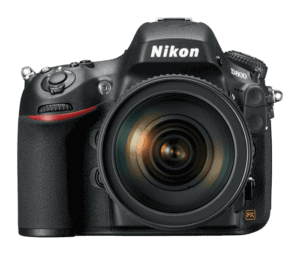 Now that I’ve had the Nikon D800 for a few weeks, I’m getting more comfortable with it – both for the good and the bad. Yes, it has luscious images with incredible detail, but there’s also a dark side to the Nikon D800. Things that its fans don’t like to mention, or perhaps dismiss as inconsequential. While some of these issues may very well be inconsequential to them, they could be real deal-breakers for another photographer.
Here’s a list of some issues you may not like about the Nikon D800.
It’s Expensive
Despite a recent $200 price drop (and that may be temporary), the Nikon D800 is still a rather expensive camera at $2795. For many of us, that’s quite a hefty investment to make. Bear in mind that investment may only be part of the picture. If you’re a fan of adding a battery grip, as I am, then you can tack on another $389 for the Nikon MB-D12. You can get a third-party grip for less money – and apparently lower quality. If you use a Really Right Stuff or other brand of L-Plate bracket, look for another $200. Of course, these prices are all pre-tax and we still haven’t put a lens on the camera yet.
It’s Heavy
If you’re used to carrying a DSLR of this class, the weight may not be an issue for you. If you’re moving up from a smaller DSLR or other type of camera, then you need to be prepared to lug this puppy around with you. Sure, it feels fine when you first pick it up. It’s like a new baby and everyone knows that newborn baby poop doesn’t stink. After you’ve changed a few diapers. the perception changes. Plug in the battery, add a grip and carry it around all day and then you’ll start to feel the weight.
It’s a Resource Hog
You may have read that the Nikon D800 is a 36 megapixel camera, but do you really understand what that means?
- You only get 200 shots on a 16GB card. My D700 gets over 600 on the same card
- Those files are much slower to download from your card to your computer
- Loading an image in your post-processing software takes three times as long (as does saving it)
A RAW file from my Nikon D700 is 25MB. A RAW file from my Nikon D800 is 75mb. You do have an option to mitigate this a bit using NEF compression. The Lossless compression option with reduce those file sizes from 75MB down to 38-50MB. Nikon’s compression method is “virtually lossless”, meaning that it only throws away bits that are outside of the visual spectrum. That’s why the file sizes vary so much – the compression depends upon the information gathered in each shot. In most cases, I wouldn’t worry about it. If you’re a wedding photographer who needs to absolutely assure that all of the highlight information in a wedding gown remains present without posterization, then keep using the full-sized NEF file.
You’re going to need to consider how these files will affect your computer when you download them. Do you have enough disk space to store them? Do you have sufficient memory to process them? The Nikon D800 can capture glorious 14-bit detail, which means you should use 16-bit processing to retain that data. That may put a bit more burden on your CPU and GPU to push those pixels around. How much space are you using with your photos right now?
Would you have enough room if they were three times as large? The cost of this camera may increase as you buy more resources to support the larger files it creates. Sure, you can tell yourself that you’ll delete more images to save space. That takes time, though. One way or another, you’re going to pay for those 36 megapixels.
The “Oh, Yeah” Moments
There are times when I just get a shot with a boring sky. I don’t mind compositing a better sky into the shot. In fact, I’ve got a lovely collection of sky and cloud photos that I’d taken with my Nikon D700 over the years. When I loaded one of those images to use on a scene that I shot with the Nikon D800, this is what I saw.

Oh, yeah. That’s not going to work because the full sized image from the D700 is three times smaller than the Nikon D800 image. I could stretch it, but then it looks stretched. Hey, it’s a good reason to own onOne Software’s Perfect Resize, though.
The Nikon D800 Isn’t All Bad News
If it sounds like I’m trying to convince you that you shouldn’t buy the Nikon D800, I’m not. It’s a wonderful camera and I really am glad I bought it. What I would like to do is make sure that you’re aware of the drawbacks that go along with this DSLR. The thing that makes it great is that you can capture a lot of detail and information. That’s also the same thing that will eat up your resources. You just need to be aware that this is a different beast than you may have used in the past.




Good points about the real costs and 3x image file size differences. I remember playing this wonderful game with D2hs 4.2mp, D2x 12mp. The 3x jump from 4 to 12mp was a real expensive surprise after CF cards and hard drive quickly filled. The jump from D3 12mp to D4 16mp, has less effect so far.
In a few years, perhaps 36 megapixels won’t matter very much – just as the jump from 4MP to 12MP doesn’t seem so significant now. Think about it. I have 64GB on my iPhone. When I started out with my first Apple product, I was soldering my own memory boards just to add another 16K RAM and my 5MB Apple Profile drive was considered HUGE (both in size and storage capacity).
The thing is that we’re living now and, for some folks, these are concerns that they ought to consider before buying.
I believe this is a matter of prospective. The D800 is the first camera to jump into a quality level that compares with medium format cameras. So is it expensive?….No! Its actually down right cheap. Is it heavy? In comparison its the lightest camera at this quality level. And of course this level of detail requires big files. If you have worked with digital medium format cameras you can appreciate how ground breaking the camera is. I loved my D700, but I would never go back after working with the D800. Do you think we will see a D4X with 54mp?
True, but consider the perspective of someone who hasn’t used one of the top-end cameras, rather than someone comparing it to a medium format camera that he or she never considered. If you’re moving up from one of the smaller DSLR cameras to the D800, these are some pretty big issues. Comparing a $3000 camera to a $500 camera is quite a jump. Moving down from a $50K camera…well, it’s a dream!
Agreed, William. Really, the D610 is better.
Max